
Table of Contents
Planning a business visa application is an important part of managing employee travel. A delayed or rejected visa application doesn’t just inconvenience the employee. It can push back a client meeting, prevent someone from attending a conference they were supposed to present at, or stall a project that was already in motion. Companies that leave visa management to chance end up managing the consequences under pressure.
Clear responsibilities, accurate documents, and realistic timelines make the difference between a trip that goes ahead and one that doesn’t. A well-planned process helps HR teams, travel coordinators, and employees work together, keeping business trips organised and reducing the chance of last-minute problems.
Why Do Companies Need a Clear Visa Management Process?
When an employee travels abroad for work, the company must consider more than flight schedules and hotel bookings. Entry requirements, supporting documents, and processing times can vary from one destination to another. Lack of a proper process may lead to disruptions in travel plans even with small mistakes.
An employee who travels to an international trade show, for instance, might require a letter of invitation from the trade show organiser. The company may not have the document ready if the employee asks for it just a couple of days prior to the trip.
A consistent process helps companies:
- Reduce delays caused by missing or incorrect documents.
- Plan meetings and events around realistic travel dates.
- Avoid unnecessary rebooking costs and last-minute changes.
- Keep employees informed about application progress.
It also gives management better control over employee business travel, particularly when several staff members travel throughout the year.
Who Should Handle the Business Visa Application Within the Company?
Most companies split responsibility informally between HR, administration, and the travelling employee. That works until something goes wrong and nobody is sure whose job it was to follow up.
Assign ownership clearly. One person or team should track each business travel visa application from submission until the visa is confirmed. That person collects the documents, submits or coordinates the submission, monitors status updates, and flags problems early enough to resolve them.
For companies with frequent travel or employees heading to destinations with complex requirements, using a corporate travel agency in Abu Dhabi brings outside expertise into the process. They know what specific countries require, which documents are commonly missing, and how to manage appointment bookings and follow-ups efficiently.
What Information and Documents Should Companies Collect From Employees?
Business visa documents vary by destination, employee nationality, and the purpose of the visit. There’s no single universal list.
That said, most applications require some combination of the following:
- Passport with sufficient validity: Check the passport number, expiry date, available pages, and any required period of validity beyond the planned stay.
- Employee information: Confirm the full name, date of birth, nationality, and other details match the passport.
- Company letter: A company letter confirming employment, purpose of travel, and financial responsibility.
- Business invitation: Obtain an invitation from the overseas client, partner, conference organiser, or host company when requested.
- Travel itinerary: Keep the proposed travel dates, accommodation details, and meeting schedule ready.
- Financial or sponsor documents: Provide evidence of funding or sponsorship if the relevant authority asks for it.
These are common examples, not a universal list. Some destinations may require an appointment, biometric information, proof of employment, or additional supporting documents. Companies should always check the official instructions for the specific destination.
How Should Companies Plan Travel Dates Around Visa Processing Times?
Planning for a visa should be started as early as possible after approval of a business trip. It is important for companies to verify current processing recommendations from the Embassy/Consulate/official visa service. Processing timings may vary and extra checks may be needed for some applications.
It is wise to allow extra time for appointments, document corrections, public holidays, or requests for further information. A conference date may be fixed, but an application can still take longer than expected.
For UAE-based companies arranging international business travel, require an appointment at a consulate in the UAE before the application can proceed at all. That appointment availability is a variable that can’t be controlled from the inside.
The planning stage should include these checks:
- Confirm whether an invitation letter is needed before applying.
- Check whether the employee must attend an appointment or provide biometrics.
- Review the earliest available appointment dates.
- Allow a reasonable buffer before the planned departure.
- Review cancellation and change conditions before purchasing tickets.
Where possible, avoid committing to expensive, non-refundable travel arrangements before visa approval. If bookings must be made earlier, choose flexible options when the budget allows.
Good timing is not simply about submitting an application early. It is about understanding every step that must be completed before the employee can travel.

What Common Mistakes Should Companies Avoid When Applying?
Small errors can lead to delays, extra costs, or refusal. Fortunately, many of the issues are avoidable if someone is reviewing the application before submission.
Common mistakes include:
Choosing an incorrect visa category: A business visitor visa could be suitable for your meeting or conference, but not for all work activities or paid work. Companies need to ensure their planned activities are permitted.
Providing inconsistent information: Travel dates, employee information, invitation letter and application form should match. Just a name or date change can raise questions.
Ignoring passport validity: Some destinations require passports to remain valid for a specified period after arrival or departure. Check the rule before starting the application.
Leaving out supporting documents: Missing letters, financial documentation, or appointment confirmation will cause the process to be delayed.
Applying too close to departure: Short notice may result in no time for correcting errors and/or answering further requests.
An overall review by a second person can catch many of these issues before the application is submitted.
How Can Companies Manage Applications for Multiple Employees?
Managing one application is relatively straightforward. Coordinating ten employees travelling to the same conference requires a more organised approach. Each person may have a different passport, visa history, appointment date, or document requirement.
A shared tracker gives the company a clear view of progress. It can be maintained in a spreadsheet or an internal travel management system.
The tracker should record:
- Employee name and destination.
- Visa category and required documents.
- Application submission and appointment dates.
- Current status and outstanding actions.
- Visa validity and approved travel dates.
- The person responsible for follow-up.
When planning for trade shows, training sessions or international client visits, companies should plan backwards from the event date. This helps identify employees whose applications need earlier attention.
Access to the tracker should be limited to authorised staff because passport details and visa records contain personal information. Updates should be recorded promptly so that everyone works from the same information.
What Should Companies Include in Their Visa Application Checklist?
Before an employee travels, the responsible team should complete a final check.
- Confirm the destination and identify the correct visa category
- Passport validity checked against the destination’s requirements
- All required supporting documents collected and reviewed
- Application submitted and appointment date confirmed where applicable
- Status updates tracked and approval confirmed in writing
- Check that the approved dates and conditions match the trip
- Confirm flights, accommodation, and meeting arrangements
- Share relevant travel documents with the employee securely
This short review helps the company confirm that the necessary steps have been completed before departure.
What Should Companies Do If an Application Is Delayed or Refused?
It is not always the case that if the application is late, the employee will not be able to make the trip. However, the company should act quickly rather than assume approval will arrive before departure.
First, check the official application portal or contact the relevant visa authority or service provider for an update. If additional documents are requested, arrange them promptly and follow the stated submission instructions.
If an application is refused, review the written explanation carefully. Depending on the reason and the rules of the destination country, the proper step should be taken. In some instances, the employee may be able to make an error correction or provide additional evidence. In other cases, a new application or review may be requested (where applicable) within the rules.
Avoid submitting another application without understanding what went wrong. Doing so may lead to further costs without resolving the original issue.
Meanwhile, the company should consider practical alternatives. The meeting can be held virtually, another staff member can attend or the meeting may need to be postponed. Check flights and hotels can be cancelled or changed.
How Can a Travel Agency in Abu Dhabi Help With a Business Visa Application?
Some external assistance can be useful for companies that conduct regular international trips. A travel agency can help organise the visa preparation stage and coordinate it with the wider travel plan.
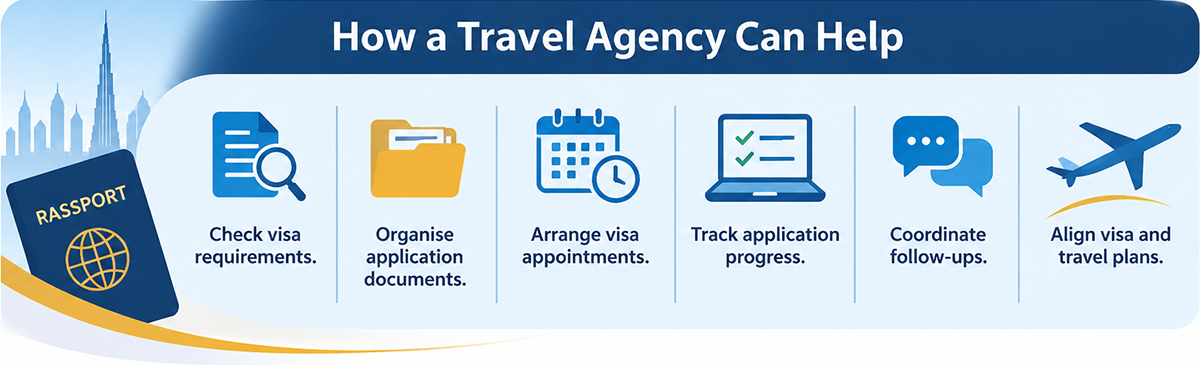
Depending on the destination and the services available, visa assistance in Abu Dhabi may include:
- Identifying relevant visa requirements and document lists.
- Helping organise forms and supporting documents.
- Assisting with appointment arrangements where available.
- Checking application progress and coordinating follow-ups.
- Aligning visa preparation with flight and hotel arrangements.
Access to this support can be especially useful when employees travel to different destinations throughout the year. Rather than handling each trip from scratch, the company has a more organised way to prepare for upcoming travel.
Businesses seeking business visa services in Abu Dhabi should confirm the scope of support available for their destination and employee category. A travel agency can help with preparation and coordination, but it cannot guarantee approval. The final decision always rests with the relevant visa authority.
Conclusion
Managing employee visas requires clear responsibilities, accurate documents, and enough time for each stage of the process. Companies that use a consistent checklist and track every application can reduce avoidable delays and keep business travel plans on schedule.
A travel agency in Abu Dhabi may also assist with document preparation, visa coordination, and related travel arrangements. With the right planning, businesses can manage overseas trips more smoothly and respond quickly when requirements change.
Overseas Travel provides business visa assistance services to help companies manage employee visa applications and travel documents smoothly. Contact us for support with your next business trip.
Frequently Asked Questions (FAQs):
What is a business visa application?
It is an application for a business visa required to enter another country for work-related visits, such as meetings, conferences, or client discussions.
Can a travel agency help with business visa applications?
Yes. A travel agency can help check requirements, organise documents, arrange appointments where available, and coordinate visa-related travel plans.
How long does it take to get a business visa?
Processing times vary by destination and visa type. Applying early gives employees more time to handle delays or provide extra documents.