


Table of Contents
Corporate travel booking companies deal with unused tickets regularly, and businesses can lose money if those tickets are not managed properly. A client meeting moves, a colleague resigns, or an airline retimes a flight. The ticket was paid for, but nobody flies. Without proper tracking, the ticket or its remaining credit may expire unused. This guide explains how unused ticket value is tracked, recovered and reused, and what businesses can do to prevent these losses.
Why Do Businesses End Up with Unused Flight Tickets?
It’s rarely carelessness. Business plans change faster than airline tickets do.
- Cancelled trips and postponed meetings. A client reschedules or a project stalls. The flight was booked weeks ago, so the cost is already committed. If the fare was non-refundable, the value may only come back as a credit.
- Employee schedule changes. Someone gets pulled onto an urgent task or falls ill. The ticket stays in their name, and unless someone flags it, it can sit forgotten until it expires.
- Employee turnover. A traveller resigns before the trip. Most unused tickets and airline credits are subject to passenger name restrictions, so they may not be transferable to another employee.
- Airline-initiated changes. The airline cancels or retimes a flight, and the new schedule doesn’t work for the meeting. Your rights to a refund or credit then depend on the airline’s rules and the fare bought.
Unused Flight Tickets vs. Airline Credits: What Is the Difference?
An unused ticket and an airline credit aren’t the same thing. What you hold depends on the fare you bought and how the cancellation happened. Rules differ by airline, so always check the fare conditions. This table shows the general pattern.
| Criteria | Unused ticket | Airline credit |
| What it is | A paid ticket not yet flown | Value held by the airline after a cancellation or change |
| Refund possible? | Sometimes, depending on fare type | Usually not as cash |
| Typical use | Refund or change, if the fare allows | Future booking with the same airline |
| Conditions | Set by fare rules | Set by the airline, often with an expiry date and name restriction |
Refundable and non-refundable tickets behave very differently. A refundable fare may return money, sometimes less a fee. A non-refundable fare often returns nothing, or only unused taxes and charges, or a credit. Vouchers and e-credits are usually valid only with the issuing airline, and often only for the named traveller.
How Do Corporate Travel Booking Companies Track Unused Tickets?
You can’t recover what you can’t see. Good records are the first step. This becomes particularly important when employees make bookings through different channels.
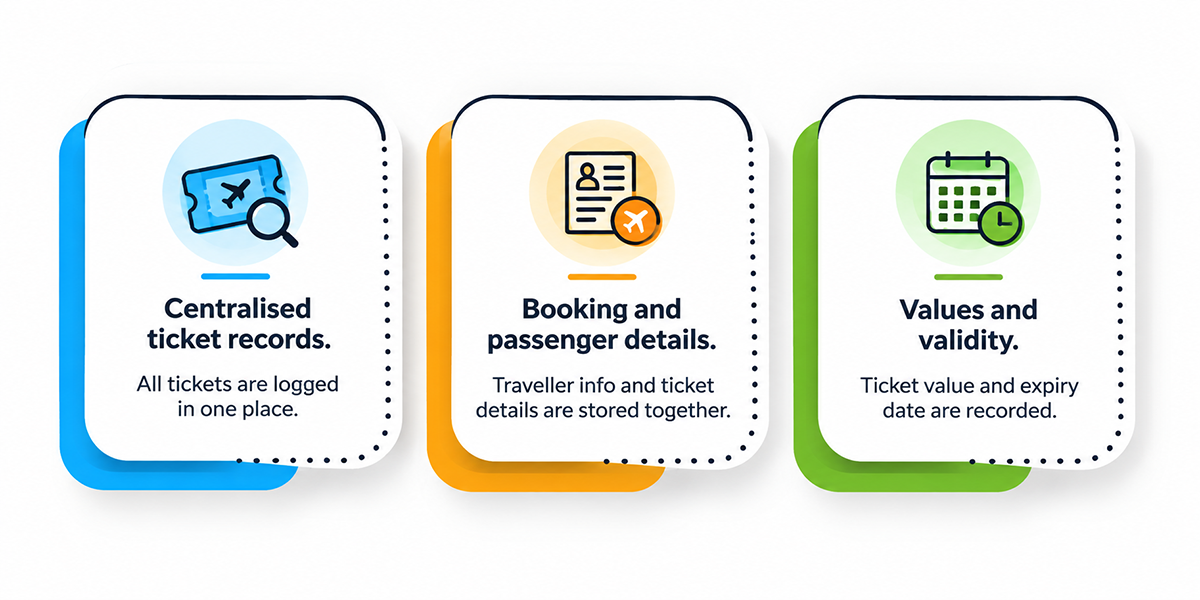
- Centralised ticket records. Every ticket is logged in one place instead of across individual inboxes. When a trip is cancelled, there’s already a record of what was paid and where it stands.
- Booking and passenger details. Traveller name, ticket number, booking date and route are stored together. Airlines ask for these details when you request a refund or apply a credit, so having them ready saves days of searching.
- Values and validity. The ticket value and the date it stops being usable are recorded at the start. That’s what makes expiry alerts possible later.
How Do Businesses Manage Airline Credit Expiry and Usage Rules?
Credits come with conditions, and missing one costs real money. The validity of airline travel credits may be calculated from the original booking, ticket issue or cancellation date, depending on the airline’s conditions.
- Expiry reminders. Alerts ahead of the deadline give you time to plan a trip and book. Sending reminders well before the expiry date gives businesses more time to arrange suitable travel.
- Airline-specific conditions. Some credits cover only the named traveller, one airline or certain routes. A credit from one carrier can’t be used on another, so the terms need reading when the credit is issued.
- Change fees and fare differences. Using a credit on a pricier flight can mean paying the difference, and a change fee may apply. Check the total cost before you commit.
How Can Unused Tickets and Airline Credits Be Reused for Future Trips?
When used correctly, an airline credit can help reduce the cost of a future flight. The trick is matching it to the right traveller and trip before it lapses.
- Applying credits to new bookings. The credit is set against a new ticket with the same airline. Your travel agency usually contacts the airline to apply for it, because some credits can’t be used through online booking tools.
- Passenger name restrictions. Many credits can only be used by the original traveller, so a leaver’s credit may not transfer to a colleague. Ask the airline whether a name change is allowed and what it costs.
- Reissuing and changes. Some tickets can be reissued for new dates, usually with a fee or fare difference. This often works better than cancelling when the trip is only delayed.
Here’s an example. An employee cancels a trip and receives a credit. Three months later a colleague needs the same route, but the credit is in the first employee’s name only. The first employee takes the next trip on that route instead, and the credit is applied before it expires.
How Does the Refund Process Work for Unused Flight Tickets?
Refunds depend entirely on the fare and the airline. Some are quick. Others take weeks. Some refunds require regular follow-up before the process is completed.
- Refund eligibility. Not every ticket qualifies, and the reason for cancelling can matter. An airline-initiated cancellation is treated differently from a voluntary one.
- Refundable ticket conditions. Refund requests must usually be submitted within the period specified by the airline.
- Following up on pending refunds. Keep the request reference and review open refunds regularly. They’re easy to forget once the trip is off the calendar.
How Do Businesses Monitor Unused Ticket Balances and Travel Costs?
Corporate travel booking companies help businesses monitor unused ticket balances, track recovered amounts and maintain better control over business travel expenses.
- Unused ticket reports. A regular summary shows what’s outstanding, for whom and until when. Finance can then plan around it.
- Remaining credit values. You can see how much is still usable and which credits are closest to expiring.
- Expense records and budget monitoring. Recovered amounts are matched against spend, so budgets show the true cost of travel and not just the amount originally booked.
Working with experienced corporate travel booking companies helps businesses maintain accurate ticket records, identify unused credits and make timely decisions about future bookings.

How Does Technology Help Manage Unused Tickets and Airline Credits?
Tracking by spreadsheet works until the volume grows. Booking tools reduce manual chasing.
- Automated expiry alerts. The system warns the booker before a credit lapses, without anyone needing to remember.
- Centralised booking systems. One platform holds every ticket, whoever made the booking. That removes the problem of credits hidden in an employee’s personal inbox.
- Travel and expense integration. Ticket data flows into expense reports, so finance doesn’t re-enter it, and the risk of mismatched figures falls.
What Can Businesses Do to Avoid Losing Money on Unused Tickets?
Prevention beats recovery.
- Choose suitable fare conditions. For trips likely to change, a flexible fare can cost less overall than a lost non-refundable ticket. Match the fare to how certain the plans are.
- Set clear credit-use policies. Decide who can use credits and by when, so they don’t sit unclaimed between teams.
- Assign responsibility. One named person or team should own unused credits and expiry dates.
- Review balances regularly. A monthly check catches expiries early and keeps the list short.
How Can Corporate Travel Booking Companies Support Businesses with Ticket Management?
Most finance and HR teams don’t have time to chase airlines, track expiry dates or read fare rules for every cancelled trip. That’s where a corporate travel company in Abu Dhabi earns its place. Through corporate travel management, an agency becomes your single contact with the airlines.
It keeps the records, tells you when a credit is about to lapse and handles refund requests on your behalf. When a trip changes, it checks whether the ticket can be reissued, refunded or held as a credit, then rebooks with the airline so nothing is missed. You also get a clear view of how much unused travel value your company is holding.
The result is less admin for your team and fewer credits wasted. Ask your agency for a regular report on open tickets, credits and refunds.
Conclusion
Unused flight tickets don’t always have to become lost business expenses. With accurate records, regular balance reviews and a clear understanding of airline conditions, businesses can recover eligible refunds and make better use of available credits.
Working with an experienced travel partner also helps companies manage changing plans and keep travel budgets under control. Effective corporate travel solutions can support this process by helping businesses review existing tickets and use available credits before making new bookings.
Overseas Travel provides corporate travel management services, helping businesses track unused flight tickets, manage airline credits and arrange future bookings. Reach out to our team for expert assistance with your business travel needs.
Frequently Asked Questions (FAQs):
Can an unused flight ticket be transferred to another employee?
Usually not. Most tickets are name-specific, though some airlines allow a name change for a fee.
Do airline credits have an expiry date?
Most do. Check the airline’s terms as soon as you receive one.
Can airline credits be used for a different destination?
Often, with the same airline, though a fare difference may apply. Confirm the credit’s terms first.
Can corporate travel booking companies help businesses reduce losses from unused tickets?
Yes. They monitor ticket balances, manage refund requests and alert businesses before airline credits expire, helping reduce wasted travel costs.