
Table of Contents
What Corporate Travel Providers Actually Do When Large Groups Need to Move Together
Corporate travel providers handling large group event logistics are doing something that looks straightforward from the outside and is genuinely complex from the inside. Getting fifty, a hundred, or two hundred people from different cities to the same venue, on time, with their accommodation confirmed and their schedules aligned, is not a task that scales simply from individual travel booking.
Events have fixed dates. Speakers have commitments before and after. Delegates arrive from multiple departure points. Hotel room blocks need to be held well in advance. Ground transport needs to be sequenced around flight arrivals that span hours. And somewhere in the middle of all of it, someone’s flight gets cancelled and the whole carefully constructed schedule needs to flex without falling apart.
This is the work that professional event travel logistics actually involves. And understanding it helps organisations choose the right partner and set realistic expectations before the planning begins.
Overview of Event Travel Logistics for Large Corporate Groups
Large group travel for corporate events is its own discipline within corporate travel management. It is not simply individual travel booking multiplied. The dependencies are different. The coordination requirements are different. And the consequences of getting something wrong are higher because everything is connected.
When one person’s travel goes wrong on a regular business trip, that person is affected. When a key speaker’s connection is missed at a major conference, the entire programme is affected. When ground transport is not sequenced correctly, fifty delegates are standing outside an airport at the same time with no clear direction.
Group travel management requires a different level of forward planning, contingency thinking, and real-time coordination than standard corporate travel. The organisations that manage it well treat it like a project with clear ownership rather than a stack of individual bookings.
Assessing Corporate Group Travel Requirements Before an Event
Good event travel logistics starts weeks or months before the first flight is booked. The assessment phase is where the full scope of the movement is mapped out and the planning framework is established.
This involves understanding the full attendee profile. Where is everyone traveling from? What are the arrival and departure windows the event schedule requires? Are there VIP attendees who need separate arrangements? Are there attendees with specific accessibility requirements? What is the total hotel room requirement and over how many nights?
Business travel services teams working on large event logistics also assess risk at this stage. Which routes are likely to have availability challenges? Which dates fall near public holidays that affect pricing or capacity? Which hotels near the venue have sufficient room blocks available for the event dates?
The answers to these questions shape the entire logistics plan. Getting the assessment right from the start helps prevent last-minute scrambling when constraints are discovered later in the planning process.
Managing Group Flight Bookings for Corporate Event Attendees
Flight coordination for a large group is more complex than it appears. Attendees are not all traveling from the same city. Arrival windows need to align with event schedules. Departure options need to work for people catching onward connections after the event ends.
Corporate travel booking for group events involves holding block allocations with airlines where volume justifies it, managing individual booking profiles for each attendee, coordinating visa requirements for international delegates, and keeping track of a constantly changing list of confirmed travelers as registrations finalise.
Key considerations in group flight coordination include:
- Staggering arrivals to avoid ground transport bottlenecks at peak times
- Booking flexible fare classes for roles where last-minute changes are likely
- Managing frequent flyer preferences and loyalty programme numbers for senior attendees
- Coordinating check-in and baggage handling for groups arriving together
- Tracking all bookings centrally so changes are reflected across the full attendee manifest
The administrative load of managing all of this across a large group without a centralised system is significant. Professional business conference travel teams use dedicated platforms that keep every booking visible and connected.
Coordinating Event Ground Transportation for Corporate Groups
Ground transport is where event logistics either holds together or starts to unravel. Delegates arriving on different flights need vehicles that are timed to actual arrivals, not scheduled arrivals. Hotel to venue transfers need to account for traffic, loading bay access, and the time it actually takes to move a large group through a hotel lobby.
Group transportation services for large events typically involve a combination of vehicle types depending on group size and movement pattern:
- Private sedans for VIP attendees and speakers requiring dedicated transport
- Minibuses for smaller delegate clusters arriving within similar windows
- Coaches for large batch movements between hotel and venue
- Shuttle services running on a fixed schedule during multi-day events
The sequencing of these vehicles requires real-time coordination between the travel team and the ground transport providers. A flight that lands thirty minutes late changes the pickup requirement. A coach that is deployed for an airport run cannot simultaneously be at the hotel for a venue transfer. These conflicts need to be managed actively, not just planned in advance.
Managing Hotel Reservations for Corporate Event Participants
Scaling room booking for corporate events is not just about booking rooms. There are various aspects of room block management in large groups, such as working out terms of the room block booking in advance, releasing rooms that are not needed within agreed time limits, coordinating room allocation for specific guests and dealing with the constant changes to dates of arrival and departure as plans change.
Hotels that handle large event groups tend to have specific operational rules which changes the way reservations are set up. Requests for early check-in need to be coordinated as a group. Group billing arrangements should be finalized before arrival, while amenity requests for VIP rooms need to be communicated well in advance to ensure they can be fulfilled.
A corporate travel agency in Abu Dhabi that’s handling a regional conference is likely to have strong relationships with the right hotels and the expertise to work out the back-and-forth with hotel groups without any issues. Those relationships result in more efficient room planning, more flexible terms and quicker resolution when problems occur.
Creating Travel Itineraries for Corporate Event Attendees
Every attendee needs a clear, personalised travel itinerary that tells them exactly where to be and when. Not a general group schedule but their specific flights, their specific transfer arrangements, their hotel confirmation, and the key timings they need to follow across the event.
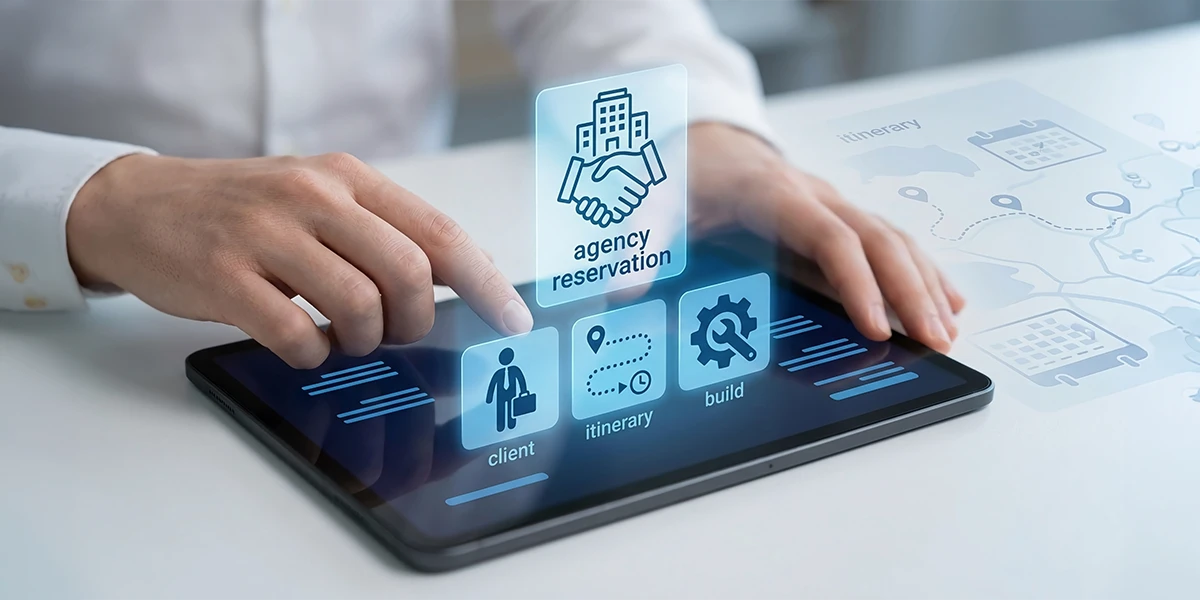
Travel arrangements for events at a professional level include producing and distributing these individual itineraries in a format that is easy to access and easy to use on a phone. Digital itinerary tools that update in real time when changes are made are now standard practice. Paper itineraries that become outdated the moment a flight changes are not.
The logistics team needs to maintain a master view of every attendee’s travel status throughout the event period. Who has arrived. Who is in transit. Who has a change that affects their ground transport or hotel check-in. This master view is what enables fast response when something shifts.
Travel Logistics Support for Conferences, Trade Shows, and Corporate Events
Different event types have different logistics profiles. A company conference with internal attendees has a more controlled attendee list and more predictable travel patterns. A trade show with external delegates, partners, and clients has more variables and a wider range of travel starting points. An incentive trip has a focus on experience quality that adds requirements beyond basic logistics.
Conference travel services that are purpose-built for each event type approach the planning differently. The attendee communication strategy for an internal conference is different from the booking coordination process for a client-facing event. The ground transport model for a single-venue conference differs from the multi-venue movement typical of a large trade exhibition.
Understanding which event type is being managed and what its specific logistics demands are is the starting point for building a plan that actually works.
Handling Last-Minute Travel Changes and Emergencies
No event travel plan survives first contact with reality completely intact. Flights get cancelled. Delegates miss connections. A speaker’s visa is delayed. A hotel room is not ready when a key attendee arrives. These situations happen and the measure of a professional logistics team is how quickly and effectively they respond.
Corporate travel assistance during an active event means having a team available around the clock who can rebook, reroute, escalate hotel issues, and update the affected attendee’s itinerary in real time. The attendee should not be left to resolve it themselves while also preparing for a presentation or managing client meetings.
Contingency planning built into the logistics structure before the event starts reduces the impact of these situations. Backup flight options identified in advance. Flexible hotel terms negotiated for potential early or late changes. Alternative ground transport arrangements on standby for the scenarios most likely to occur.
Using Technology for Corporate Event Travel Management
The operational complexity of large group event travel is significantly more manageable with the right technology in place. Modern corporate travel solutions platforms handle booking management, itinerary distribution, real-time updates, expense tracking, and attendee communication in a single system.
Useful technology capabilities for event travel logistics include:
- Centralised booking dashboards showing every attendee’s travel status in one view
- Automated itinerary updates pushed to attendees when changes are made
- Mobile access so the logistics team can manage issues from anywhere during the event
- Integration with hotel and ground transport providers for confirmed status updates
- Reporting tools that capture spend and attendance data for post-event review
Technology does not replace the judgment and experience of a good logistics team. It gives that team the visibility and tools to work faster and with fewer errors across a large, complex movement.
Benefits of Using Corporate Travel Providers for Large Group Travel
Organisations that manage large event travel through professional corporate travel providers consistently report better outcomes than those that attempt to coordinate it internally or through general travel booking tools.
The practical benefits include:
- Negotiated rates with airlines and hotels that reflect group volume
- Single point of accountability for every element of the travel arrangement
- Experienced team handling the complexity so internal staff are not consumed by logistics
- Real-time problem resolution during the event without escalation delays
- Post-event reporting that captures actual spend against budget and attendance data
The less quantifiable benefit is confidence. Leadership teams running major events need to know the travel side is handled properly. That confidence comes from working with a team that has done this many times before.
Conclusion: Why Professional Event Travel Logistics Contribute to Successful Corporate Events
The quality of an event is shaped by much more than the programme content and the venue. Delegates who experience disorganised transfers, missing hotel confirmations, or delayed arrivals due to transport issues will be in a very different mindset from those whose travel was handled seamlessly.
Corporate travel providers with real event logistics experience help protect the investment organisations make in their events. They can do this by making sure the travel side reinforces, rather than weakening, the attendee experience. Every attendee who lands on time, in the right place, with everything verified and clear, becomes a delegate who is ready to take part in the event as it was intended.
That outcome does not happen by accident. It happens because someone planned it properly, managed it actively, and responded fast when the inevitable changes occurred. That is what professional event travel logistics actually delivers.
Overseas Travel offers professional corporate event travel planning, group booking support, hotel coordination, and complete business travel management services in Abu Dhabi. Contact us for smooth, organized, and stress-free corporate travel solutions for your next business event.
Frequently Asked Questions (FAQs):
What do corporate travel providers do for large business events?
They manage flights, hotels, transportation, and travel schedules to keep large corporate events organized and stress-free.
Why is group travel planning important for corporate events?
Good planning helps avoid delays, booking mistakes, and confusion when many employees or guests are traveling together.
Why do companies use travel experts for conferences and trade shows?
Travel experts help manage schedules and logistics so businesses can focus more on the event itself.