


Table of Contents
Why International Travel Services Matter for Connecting Flights
International travel services prove their value most clearly when something goes wrong with a connecting flight. A delayed first leg. A tight connection that suddenly looks impossible. A missed flight with no clear idea of what happens next. These situations are manageable with professional support behind you. Without it, they become expensive and stressful problems to solve alone in an unfamiliar airport.
Connecting flights involve more moving parts than most travelers account for when booking. Visa requirements at the transit point. Baggage procedures that vary depending on how the tickets were issued. Transfer times that look fine on paper but leave very little margin for delays. Getting these details right before departure is what separates a smooth journey from a disrupted one.
Smart Itinerary Planning Before Booking
Most connection problems are created before the journey even begins. A layover of one hour and thirty minutes seems quite adequate from a booking website point of view. However, things may be entirely different if one is trying to make a connection from one terminal to another, pass security checks, and get to the departure gate in fifteen minutes on foot from the point of landing at an international airport.
Terminal transfers at some airports require a bus or train connection. Others involve long walking distances with no shortcuts. Add immigration screening at certain transit points and the realistic minimum time needed can be considerably higher than the booking platform suggests. International flight connections planned without this context leave travelers with no margin when the first flight runs even slightly late.
Airline selection matters for another reason too. Booking both legs with the same airline or partner airline means the carrier has an obligation to rebook passengers who miss a connection because of a delay on their own service. Separate tickets come with a different risk. If the first flight is late and the second is missed, the second airline has no responsibility and the passenger absorbs the cost. This risk is not always explained at the point of purchase.
A travel agency in Abu Dhabi that handles international bookings regularly plans connections around how airports actually work rather than around what the minimum permitted time is on a booking system.
Understanding Visa and Transit Requirements
Transit visa requirements catch travelers off guard regularly. Having the correct visa for the final destination is not always enough. Having the right visa for your final destination may not be enough either. The nation where the transfer takes place may have their own transit visa policies that will depend on the passport being carried, the airport used, and even the airline company.
One may find this very confusing because such policies apply even if one never leaves the airport. The fact that someone stays within the international transit zone does not guarantee the absence of the need for the visa. For certain passport nationalities at certain airports, a transit visa is required regardless.
The consequences of getting this wrong are serious. Denied boarding at the departure airport. Turned back at the transit hub. Neither situation is easy to resolve quickly and both are avoidable with the right preparation.
International travel requirements around transit visas also shift without much warning. A rule that did not apply twelve months ago may apply now. Travelers who check requirements only for their final destination and assume the transit points are straightforward are the ones most likely to encounter this problem.
An international travel agency that handles international bookings regularly keeps track of these requirements across different passport nationalities and transit airports. Raising this as part of the booking process rather than leaving it to the traveler to research independently is part of what professional travel support actually means in practice.
Baggage Handling Across Connections
Baggage arrangements can also vary on connecting flights. It may depend on how the tickets were issued and which airlines are involved. On a single booking with the same airline or partner airlines, luggage is usually checked through to the final destination. This means you normally do not need to collect and recheck your bags during the connection.
Separate tickets change this entirely. The traveler typically needs to collect luggage at the connection airport, clear customs if required, and recheck for the onward flight. This takes time. On a tight connection it may take more time than is available. And if the first flight is late and the second is missed, the second airline has no obligation to assist because the booking is independent.
Baggage transfer procedures also vary between airlines and airports even on single-ticket bookings. Some airlines transfer the baggage to the connecting point but only if the next flight is operated by a non-affiliated airline company. This information is important to have before leaving one’s place of residence.
Airport-Specific Guidance for Connecting Travelers
International airports may seem extremely challenging for those who have never visited them. It is not uncommon to change the terminal, and the whole process of changing terminals may require bus rides or a ride on an automated train or just walking long distances.
International layovers at complex airports benefit from specific preparation before travel. Knowing which terminal the connecting flight departs from, how the transfer between terminals works, and where immigration or security screening sits along the route allows time to be managed accurately. Finding this out on arrival under time pressure is a much less comfortable situation.
Flight connection assistance from an experienced travel team covers these details before departure. Which lounges are accessible during the layover, where the most useful facilities are, and how the airport responds when inbound delays affect onward departures are all part of what professional travel support provides alongside the initial booking.
Real-Time Monitoring and Rebooking Support
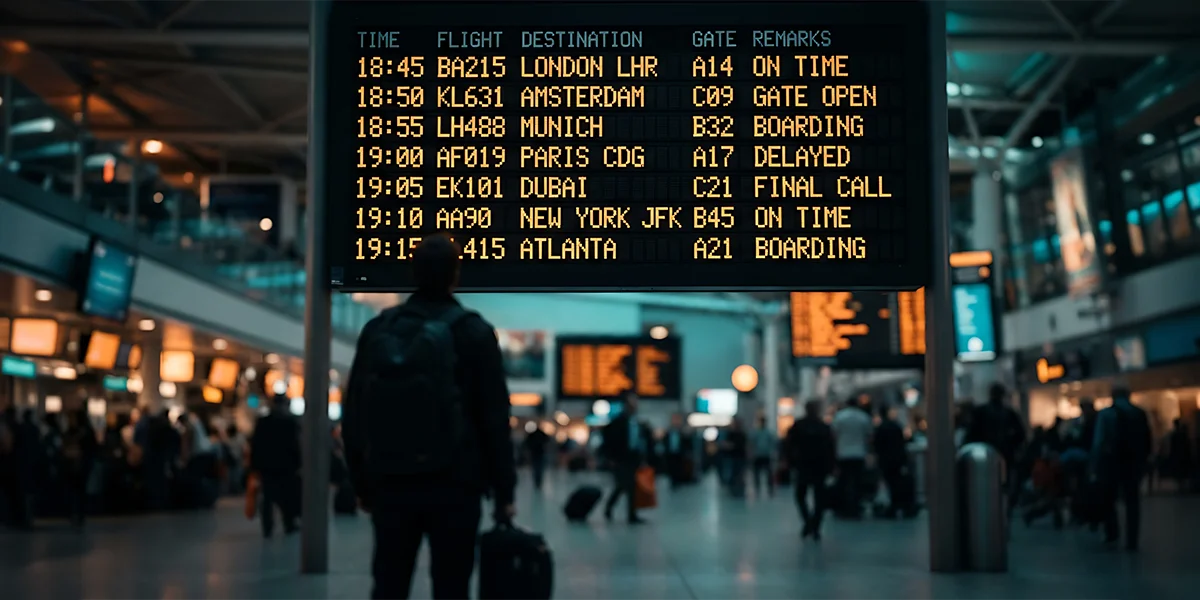
Flight schedules change. A delay on the first leg can turn a comfortable connection into a missed flight in the time between departure and arrival. Knowing about this while still in the air, rather than discovering it on landing, is what allows the response to begin early enough to be useful.
Flight rebooking services provided by professional travel teams monitor schedules throughout the journey. When a delay creates a connection risk, the team identifies alternative options before the traveler lands. In many cases the rebooking is already in progress by the time the traveler reaches the gate.
International travel services that include this kind of active monitoring provide support that goes well beyond the initial booking. The traveler has a contact to call when something changes and someone working on alternatives rather than facing the situation alone in a busy airport.
What to Do If You Miss a Connection
Missing a connection despite careful planning is not a rare event. Airlines delay flights. Weather disrupts schedules. Ground operations run slow. When it happens the response in the first thirty minutes determines how quickly the situation is resolved.
Firstly, one needs to approach the airlines in person at the airport, before leaving the arrival gate zone. If an airline deals with passengers that have missed their connection because of a flight delay, then the airline is supposed to reschedule to the next flight as well as to provide hotel accommodation and meals in case it is necessary to spend a night.
Travel documentation prepared before departure, including booking references, insurance policy details, and emergency contact numbers, makes this process faster. Knowing what the insurance policy covers for missed connections before traveling avoids the situation of trying to understand the policy while also managing the rebooking process.
When tickets were issued separately and the missed connection is not the airline’s fault, the situation is more complicated. Having a professional travel team to consult in such situations can be highly beneficial. Travel consultants are aware of all the options and policies and know how to handle the procedure in such a way that saves the costs and time.
Making the Most of a Long International Layover
A long layover does not have to be unproductive or uncomfortable. Many international airports offer facilities that make a four to eight hour wait genuinely manageable.
Depending on international transit visa policy, some layovers can be long enough to get out of the airport and spend some hours exploring the city. In order to do so, it is necessary to check if you need any transit visa and if you have enough time to leave the airport, explore the city, and get back through security before the departure gate closes. Not every layover suits this option but many do with the right planning.
Airport lounges accessible through airline membership, credit card benefits, or day passes offer a considerably better environment than the general departure area for long waits. Rest rooms, showers, quiet seating, and food and drink are available in most international lounges and the access cost is often recoverable in the value of what is offered during a long wait.
For particularly long or overnight connections, an airport hotel can be a much better option. Hotels connected directly to a terminal can let you get some proper rest without turning a long journey into the city. Even a few hours of uninterrupted sleep can make the next part of an international journey much easier.
Common Connecting Flight Mistakes to Avoid
The same mistakes appear consistently across connecting flight problems:
- Booking connection times that look adequate on a screen but leave no margin for real airport conditions
- Not checking transit visa requirements for every point in the itinerary including connection airports
- Assuming baggage will always transfer automatically regardless of how the tickets were issued
- Overlooking terminal changes and underestimating the time required to transfer between them
- Booking separate tickets without understanding the implications for rebooking and baggage if something goes wrong
- Not allowing sufficient time for immigration and security at connection airports where these are required
Each of these is avoidable with the right preparation and professional guidance before departure.
Conclusion
Planning your international connections effectively requires a set of additional actions in order to prepare and react properly. These actions include the help of international travel services which will provide you with itinerary creation, visa and transit requirements research, baggage information, real-time monitoring, and rescheduling support.
The value of professional support is most visible when something changes. A delay, a missed connection, a visa question at check-in. Having a team available to respond quickly, handle the rebooking, and coordinate what comes next turns a significant disruption into something manageable.
For international travel involving multiple connections, that support is worth having in place before departure. Looking for it after something has already gone wrong is always the harder and more expensive version of the same problem.
Overseas Travel offers professional support for connecting flights, layovers, and international travel planning. Get in touch with us to plan your journey with ease.
Frequently Asked Questions (FAQs):
How much time should I allow for a connecting flight?
It depends on the airport, airline, terminal change, immigration, and security procedures. Longer connections are usually safer.
Can I leave the airport during a long layover?
You may be able to leave if you meet the entry or visa requirements and have enough time to return for your next flight.
Can a travel agency help with connecting flights and layovers?
Yes. A travel agency can help plan suitable connections, check travel requirements, and provide support when flights change.